

Heather Steed
Graphic Design and Marketing
2026 Graphic Design Trends: Why Personality Wins
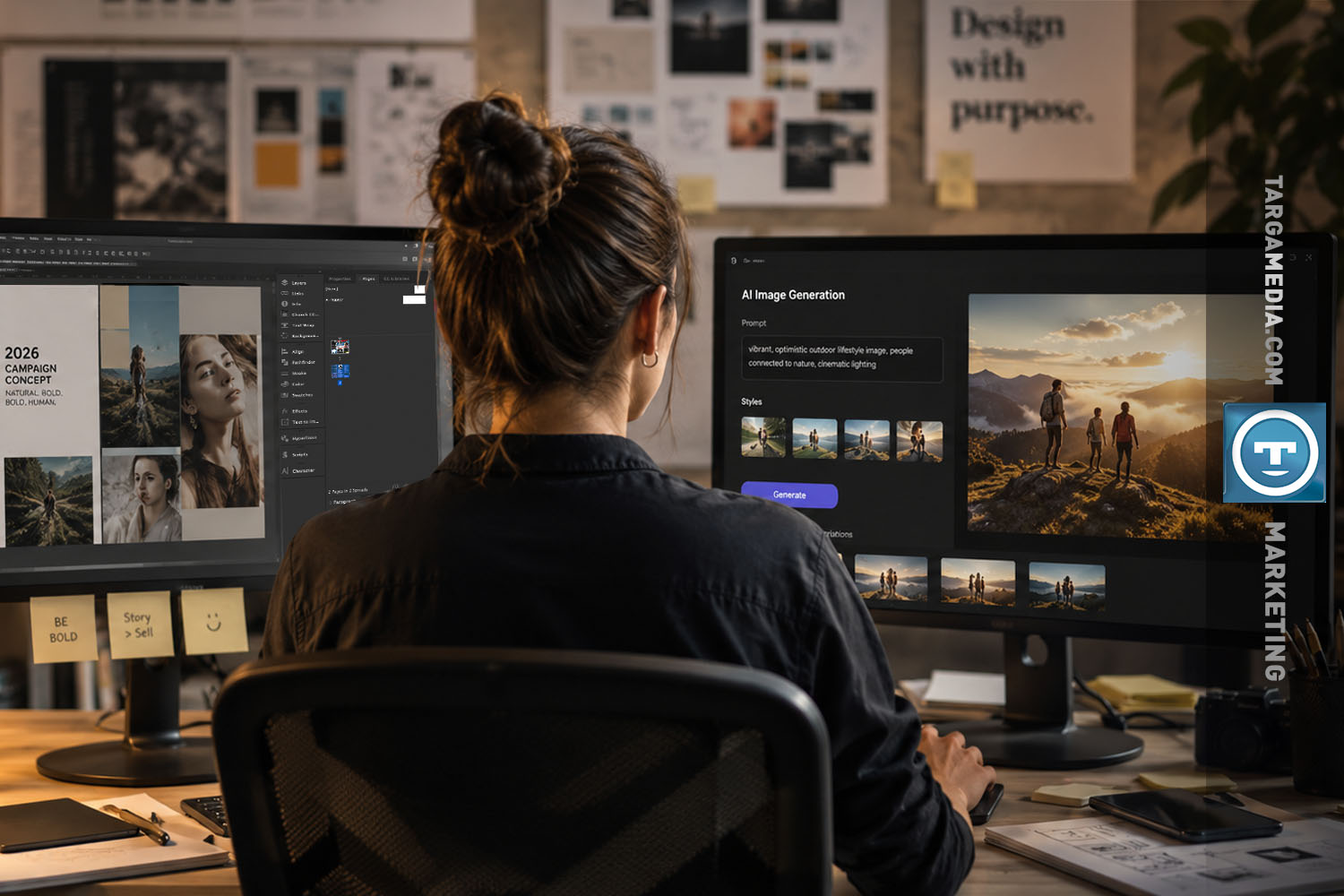
 While that’s an advantage for quick turnarounds, it also means a visually pretty design isn’t enough to grab anyone’s attention anymore.
The most important creative shift this year isn’t a specific color palette, a trending typeface, or an illustration style. It is a fundamental pivot in what people value once everyone is using the same kinds of tools.
AI Continues to Change the Rules
For a long time, good design was heavily judged by technical execution. If you had the specialized skills to build clean vectors and perfect compositions, you won the room. Today, that execution premium has shrunk dramatically. Platforms like Canva, Figma, and Adobe Firefly have dramatically lowered the barrier to making professional-looking content.
This isn’t a bad thing. It frees creative teams from spending all their time making assets and gives them more time for strategy, which ensures design goals are met. The downside? Polished design is increasingly a commodity. Effective visual communication is the real luxury.
The Shift Toward Human-Centered Creativity
Because generative tools are incredibly good at mimicking polished aesthetics, authentic human work has become a premium asset. We all appreciate the raw efficiency of the technology, but nobody wants their brand to look like a generic corporate template. In an ecosystem where a machine can simulate a safe, sterile voice flawlessly, the work that keeps a distinct human perspective is what wins.
Josh McCowan, a designer here at Targa, put it clearly:
When we evaluate our work today, the question shouldn’t be “Is it clean?” but rather “Does it feel human?” That means prioritizing:
- Real personality over corporate safety
- Organic imperfections over sterile, mathematically perfect vectors
- Self-aware humor and hyper-local context
- Lived experiences and unedited photography
- Distinct opinions or points of view
- Clear, concise language
As AI literacy grows, knowing when not to use AI may become just as important to brand perception as knowing how to use it well. These are the creative boundaries where prompt-based often generation falls flat. They are the details that make a piece of creative work memorable and unexpected.
Why Authenticity Matters in AI-Era Design
If a campaign manages to make someone pause and feel an actual emotion, they are much more likely to remember the brand. Historically, companies tried to walk a safe middle ground—they wanted to look distinct, but never risky or unfamiliar. The current tech landscape turned that logic upside down. When everyone plays it safe with polished AI templates, they end up blending into a wall of background noise.
Brands that incorporate playful experimentation, surreal concepts or distinctive illustration styles end up having a stronger voice that stands out in increasingly similar AI-generated content.
You can see this dynamic playing out on highway billboards throughout the Salt Lake Valley. Consider the hyper-local digital campaign from the Ken Garff Automotive Group. They sell cars, yet you will almost never see a vehicle featured on their billboards. Instead, their long-running “We Hear You” slogan has morphed into their recent “Wildly Qualified Listeners” campaign featuring text-heavy, slightly polarizing dad jokes. Their current rotation features lines like: “We’d hire deer…But they keep getting caught in the headlights.” and “We’d hire dogs…but every test drive: head out the window.”

Local marketers and designers love to argue over whether these signs actually make sense for a multi-million-dollar dealership group. But that debate is exactly why the strategy works, even if it’s not your cup of tea. By choosing an awkward, genuinely funny, text-focused approach over a generic AI-rendered image of a truck driving through mountains, they give commuters something to talk about on their way home.
What 2026 Design Trends Mean for Creative Teams
The main lesson for design teams right now is simple: stop building your brand around fleeting aesthetic trends. Build it around an authentic point of view.
The brands that succeed over the next few years won’t be the ones chasing every new aesthetic. They’ll be the ones using new tools to express something unmistakably their own.