2026 Graphic Design Trends: Why Personality Wins

2026 Graphic Design Trends: Why Personality Wins

Heidi Blackburn

Heather Steed

Graphic Designer

2026 Graphic Design Trends: Why Personality Wins

A few years ago, you could spot a brand with a seasoned creative team from a mile away. Today, that boundary is incredibly blurry. High-powered digital design tools have made clean, polished layouts accessible to everyone. While that’s an advantage for quick turnarounds, it also means a visually pretty design isn’t enough to grab anyone’s attention anymore.

The most important creative shift this year isn’t a specific color palette, a trending typeface, or an illustration style. It is a fundamental pivot in what people value once everyone is using the same kinds of tools.

AI Continues to Change the Rules

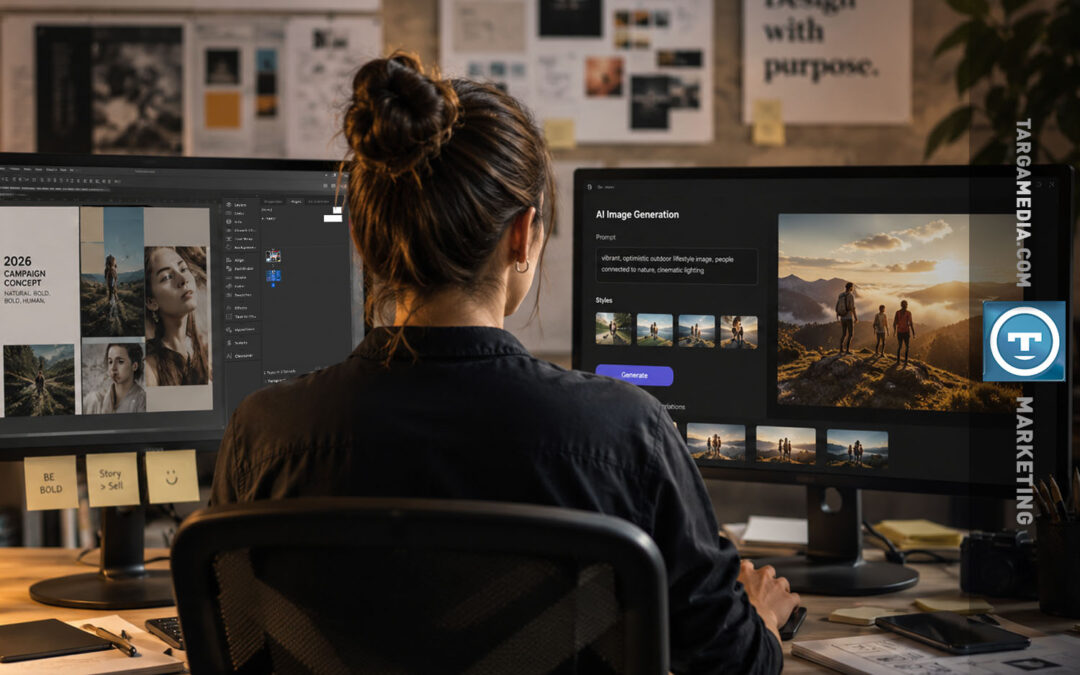
For a long time, good design was heavily judged by technical execution. If you had the specialized skills to build clean vectors and perfect compositions, you won the room. Today, that execution premium has shrunk dramatically. Platforms like Canva, Figma, and Adobe Firefly have dramatically lowered the barrier to making professional-looking content.

This isn’t a bad thing. It frees creative teams from spending all their time making assets and gives them more time for strategy, which ensures design goals are met. The downside? Polished design is increasingly a commodity. Effective visual communication is the real luxury.

The Shift Toward Human-Centered Creativity

Because generative tools are incredibly good at mimicking polished aesthetics, authentic human work has become a premium asset. We all appreciate the raw efficiency of the technology, but nobody wants their brand to look like a generic corporate template. In an ecosystem where a machine can simulate a safe, sterile voice flawlessly, the work that keeps a distinct human perspective is what wins.

Josh McCowan, a designer here at Targa, put it clearly:

“The explosion of AI-generated content has created a new hunger for authenticity, not just in marketing, but anywhere design plays a role. For us, AI speeds up exploration, removes technical and artistic barriers, and gives us new ways to refine our work. But the same widely available tools that expand creativity have also introduced a new kind of sameness. Clichés can appear almost overnight. That puts a greater premium on judgment, taste, restraint, and genuineness, all qualities strong marketers and designers bring to their work. AI has been a major benefit, but standing out still requires knowing when and how to use it, and when to push beyond its limits.”

When we evaluate our work today, the question shouldn’t be “Is it clean?” but rather “Does it feel human?” That means prioritizing:

  • Real personality over corporate safety
  • Organic imperfections over sterile, mathematically perfect vectors
  • Self-aware humor and hyper-local context
  • Lived experiences and unedited photography
  • Distinct opinions or points of view
  • Clear, concise language


As AI literacy grows, knowing when not to use AI may become just as important to brand perception as knowing how to use it well. These are the creative boundaries where prompt-based often generation falls flat. They are the details that make a piece of creative work memorable and unexpected.

Why Authenticity Matters in AI-Era Design

If a campaign manages to make someone pause and feel an actual emotion, they are much more likely to remember the brand. Historically, companies tried to walk a safe middle ground—they wanted to look distinct, but never risky or unfamiliar. The current tech landscape turned that logic upside down. When everyone plays it safe with polished AI templates, they end up blending into a wall of background noise.

Brands that incorporate playful experimentation, surreal concepts or distinctive illustration styles end up having a stronger voice that stands out in increasingly similar AI-generated content.

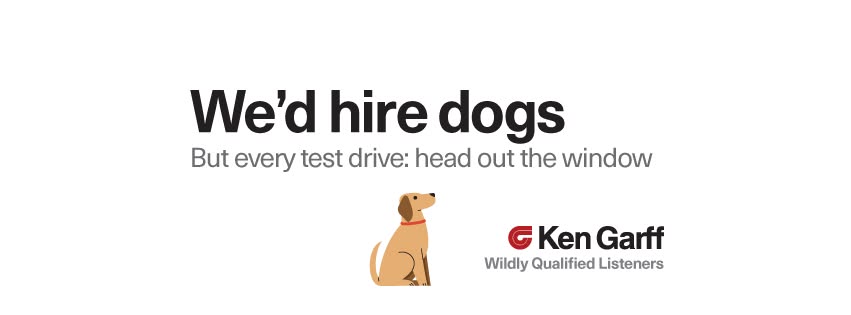
You can see this dynamic playing out on highway billboards throughout the Salt Lake Valley. Consider the hyper-local digital campaign from the Ken Garff Automotive Group. They sell cars, yet you will almost never see a vehicle featured on their billboards. Instead, their long-running “We Hear You” slogan has morphed into their recent “Wildly Qualified Listeners” campaign featuring text-heavy, slightly polarizing dad jokes. Their current rotation features lines like: “We’d hire deer…But they keep getting caught in the headlights.” and “We’d hire dogs…but every test drive: head out the window.”
 

Local marketers and designers love to argue over whether these signs actually make sense for a multi-million-dollar dealership group. But that debate is exactly why the strategy works, even if it’s not your cup of tea. By choosing an awkward, genuinely funny, text-focused approach over a generic AI-rendered image of a truck driving through mountains, they give commuters something to talk about on their way home.

What 2026 Design Trends Mean for Creative Teams

The main lesson for design teams right now is simple: stop building your brand around fleeting aesthetic trends. Build it around an authentic point of view.

The brands that succeed over the next few years won’t be the ones chasing every new aesthetic. They’ll be the ones using new tools to express something unmistakably their own.

From SOS to Success: Why Clients Call Targa

From SOS to Success: Why Clients Call Targa

Jason Steed President and CEO at Targa Media

Jason Steed

Owner and CEO

From SOS to Success: Why Clients Call Targa

A Cry for Help

This real-world request came from a client facing an urgent, high-stakes launch, a business-critical initiative with impossible timelines. The kind of project where “good enough” wouldn’t cut it—and the deadline already felt like it had passed.

Sometimes it’s not just about deadlines—it’s about capacity. When you don’t have the hands, the brain power, or the experience in-house, you need a team that can plug in seamlessly and get stuff done. Well. That’s where Targa comes in: not just as designers or contractors, but as true partners who bring clarity, speed, and strategic firepower when it matters most.

A Heroic Response

Without question, we rallied the team, got the gory details from our client, and got to work. Hand-in-hand with our client, we created a strategic, well-crafted program:

    • Clarified the core messaging so it was sharp, simple, and strategic.
    • Designed high-impact visuals that not only looked great but told the story clearly.
    • Built a visual strategic framework to communicate objectives and execution.
    • Delivered presentation tools to sell the importance of the project internally.

The result? A project that landed with impact and gave our client the momentum they needed to build consensus, inspire the leadership team, and get the initiative launched faster than they thought possible. And, even though we can’t dish on the nature of the program, let’s just say it’s having an impact as it rolls out, helping the client meet key business objectives.

The Saga Continues

This isn’t the first time we’ve gotten an SOS like this. And we hope it won’t be the last. Why? Because it means our clients see us as their go-to team when the stakes are high and the odds are stacked against them.

At Targa, that’s the kind of trust we want to earn every day: being the first call when clarity, creativity, and speed all matter at once.

Final Thought

Deadlines will always be unreasonable. Budgets will always be tight. Priorities will always shift. Urgent projects will always appear out of nowhere. But when they do, we’re proud to be the team our clients know they can count on to make the impossible happen.

Is it Targa Time? Why Smart Leaders Contact an Agency

Is it Targa Time? Why Smart Leaders Contact an Agency

Lisa Harmer

Campaign and Program Director

Is it Targa Time? Why Smart Leaders Contact an Agency

You’ve got a solid team. You’ve got a clear vision. What you don’t have? Time, budget, or quite enough hands to get it all done.

When headcount stalls but expectations keep climbing, marketing leaders are left balancing business goals, team bandwidth and burn-out or flight risk. You’re still expected to move fast, think big, and deliver impact—just with fewer resources.

That’s where an agency like Targa fits in. We don’t replace your team. We extend it. Think of us as your pressure-release valve for everything from campaign strategy to content production—without the overhead or onboarding slog.

We drop in, plug gaps, bring fresh thinking, and help you keep momentum without dropping balls or losing sleep.


So…how do you know if it’s Targa Time?

    • You have too much work but not enough time or resources.
    • Your in-house marketing team is overwhelmed.
    • You need more strategic and creative minds but can’t hire.
    • Your budgets are getting cut but you have critical work to do.
    • You’re drowning in deadlines and need everything yesterday.
    • You’re stuck dealing with agencies that over-promise, over-charge, and under-deliver.
    • You’re short on content expertise and need messaging that actually connects.
    • You’re launching into new markets and need help making a splash.
    • You’re ready to crush the competition.
    • You need to optimize your marketing and team up with sales for growth.
    • You need to streamline your channel marketing with breakthrough campaigns.
    • You need marketing help to re-define or grow your business.
    • From spin-to-win games to quizzes, challenges, contests, and skill competitions, gamification offers marketers a new kind of toolkit for engagement.

So…how do you know if it’s Targa Time?

If you answered yes to even just one of those challenges, we might need to talk! We’re here to become an extension of your team, and make marketing magic happen—faster, smarter, more efficiently, with less stress and more results.

Mental Health in Marketing—Why Empathy-based Design Matters

Mental Health in Marketing—Why Empathy-based Design Matters

Alison Hayes Sr Marketing Admin at Targa Media

Alison Hayes

People, Culture, Operations

Mental Health in Marketing—Why Empathy-based Design Matters

May is Mental Health Awareness Month, a time to reflect not just on personal well-being, but also on how our workplaces, products, and messaging affect the mental health of others. In the fast-paced world of marketing, it’s easy to default to data, deadlines, and deliverables. But what if we led with empathy?

An intention to our work at Targa is this:

“I believe in the power of empathy in design and in creating products that not only function, but also delight the humans that interact with them—while also supporting stakeholder goals.”

Sara Tranberg, Art Director, Targa Media

Empathy-based design starts by asking: What does our audience need—not just to convert, but to feel seen, supported, and understood? It considers emotional triggers, cognitive load, accessibility, and the reality that every user is a human first. When marketing materials feel intuitive, inclusive, and emotionally aware, they don’t just sell—they build trust and connection.

For our team, empathy also means designing workflows that support the mental health of our own marketers and creatives. That includes clearer briefs, realistic timelines, space to recover from burnout, and collaborative feedback that builds people up instead of tearing them down.

Mental health in marketing isn’t just a trend. It’s a necessity. And it starts with empathy—both in what we create and how we create it.

Jason’s Take

Just putting a punctuation point on Alison’s insights here. Twenty-five years in visual communication has taught me how empathy-based marketing lets us lead out with heart, and anchor our “advertising” in authenticity. Marketing with heart is not merely a strategy; it’s a philosophy. It’s about transcending the conventional transactional approach and fostering a deeper connection with your audience. By leading with heart, marketers embrace the vulnerability and authenticity that come with genuine human interactions. This approach isn’t about leveraging emotions for manipulation but about understanding and respecting the emotional triggers of your audience. It’s a call to be curious, to listen deeply, and to engage with sincerity.

More here ›

Email Marketing Trends for 2025: Real Talk, Real Tips

Email Marketing Trends for 2025: Real Talk, Real Tips

Lisa Harmer

Campaign and Program Director

Email Marketing Trends for 2025: Real Talk, Real Tips

Did you know there are about 361 BILLION emails sent every day? That is TOO MANY EMAILS. It’s no wonder the sight of an inbox overflowing with bolded subject lines screaming for attention is universally soul-crushing. For marketers, it’s even worse. How do we craft emails that actually stand out, earn a click, and (gasp) drive action—without ending up in the digital Unsubscribe graveyard? It’s not easy!

We’ve spent the past year obsessing over email trends and tactics: the good, the bad, and the downright cringe-worthy. We’ve attended every webinar, skimmed every industry report, and shamelessly judged our clients’ efforts along with those emails that land in our own inboxes. So grab your coffee (or wine, no judgment), and let’s dive into our top tips for email marketing greatness in 2025.


1. Keep It Simple, Not Stupid

Remember the #1 reason you’re sending B2B emails? Trust. You want to build relationships, deliver value, and—eventually—sell more stuff, more easily.

Let’s face it. There is a lot of crap email out there! I spend one Monday a month doing an objective litmus test of the emails in my inbox. Some emails are too long, others too vague, some clearly have no idea what I do for a living (no, I am not interested in developing off-shore code) and some are so epically bad they literally go straight to our Wall of Shame. However, when we find one of the rare few that piques our interest and actually makes us read, engage, or share the content, we pass it around the office as a reminder of what works. Of course, we always look at the data, too, (see #8) because it doesn’t really matter what we like, it just matters what works.

Pro Tip: Always ask: “Would I open and read this if it landed in MY inbox?” If the answer is a hard no, go back to the drawing board.


2. Remember It’s Not All About YOU

Newsflash: Your audience doesn’t wake up excited to hear about your product launch, your webinar, or your quarterly update. They care about themselves.

When crafting your message, you should always ask: “So what? Why should they care?” Are we solving a pain point? Making their life easier? Offering something genuinely valuable? If not, there’s a delete or an unsubscribe in our future.

Pro Tip: Count how many times your email says “we” vs. “you.” Shift the balance in favor of your reader. We went through this exercise with a client and when we rewrote their product launch email from a “We’re so excited to share” tone to a “You’ll love this because” vibe, click-through rates doubled.

3. Be Conversational

Nobody wants to read an email that sounds like it was written by a boring engineer or a stodgy lawyer (sorry to all of my engineer and lawyer friends but you know it’s true!). Here’s a fun fact: Emails written in a casual, conversational tone have a 15% higher open rate than overly formal ones.

So keep your story short, snappy, and—most importantly—human. Your reader should feel like you’re talking to them, not at them. Ask yourself: “Would I actually say this out loud at a conference or cocktail party?” Tell a story that’s interesting, compelling and genuine and you’ll be more popular than the open bar.

Pro Tip: Start with a strong opening line. Something relatable or cheeky works wonders: “Ever feel like your inbox has turned into a digital dumpster fire?”

4. H.I. Is More Important Than A.I

At Targa, we believe that AI and HI (human intelligence) work hand in hand. AI will become more pervasive and incrementally smarter, but it can’t replace humans. The value of REAL stories and REAL content that resonates with REAL humans will become increasingly valuable. Emails that feel genuine—not generated—are the ones people will engage with and remember.

Pro Tip: Tell the story your readers want or need to hear and make it personal. Let AI help you with the polish and the editing but keep the core genuine and human.

5. Start With WHY

Targa always promotes the value of marketing with purpose. Sometimes it’s hard, especially when we have a lot of good, valuable information to share. But every email we send should have a purpose. Are we trying to get someone to sign up, download, or buy? Whatever it is, we have to make that clear, compelling, and easy to act on.

Too many CTAs can dilute your message. So we stick to one primary goal, with a secondary backup option if needed (e.g., “Register for the webinar” vs. “Learn More”).

Pro Tip: Emails with a single, focused CTA get 371% more clicks than ones with multiple conflicting actions.

6. Choose your Own Adventure

Sometimes, it’s okay to give your readers options. A quick roundup email with small, punchy teasers lets them choose what piques their interest. A client’s teaser-style newsletter saw 40% higher engagement rates when they gave readers a few focused choices.

Think of it like headline news, a veritable newsletter buffet—something for everyone, but not too much of anything.

Pro Tip: Track which teasers get the most clicks. Use that data to guide future content strategy.

7. Get @*$%-ing Creative!

It’s true. A little humor, a little shock-and-awe, sometimes even a little swear word here and there can help break through the clutter. Think infotainment: inform + entertain. Remember, you’re not just competing with other emails—you’re up against every piece of content on the internet where we look for news and information. And, guess what. We read it because it’s entertaining! Just like nobody wants to be stuck by the boring guy at a party, you also don’t want to read that guy’s emails. Keep it real, keep it entertaining, keep it fun, keep it weird.

Think of it like headline news, a veritable newsletter buffet—something for everyone, but not too much of anything.

Pro Tip: Test bold subject lines or unexpected visuals. Just make sure they align with your brand voice.

8. Get It Moving and Shaking

Animations in email get attention. And that’s important when you’re trying to stand out. Guess what else? They’re entertaining! Or informational! Or both if you’re doing it right. Keep it simple and intentional and even a subtle animation can draw the eye, highlight key content, and make your message stick. It’s like email gold! Really. Emails with GIFs see a 25% higher engagement rate!

Think of it like headline news, a veritable newsletter buffet—something for everyone, but not too much of anything.

Pro Tip: The first frame of any animation needs to have all of the content you want to show in a static image.

9. Data Trumps Opinion, Always

Let’s face it, we all have opinions. Some are good, some are bad, some are downright stupid! I had a brilliant boss who always used the phrase “Well, data trumps opinion” and she never hesitated to throw down that gauntlet when someone offered up their thoughts on a specific headline or subject line.

The data is key, and testing is imperative. Here’s a fun fact: A/B tested subject lines can improve open rates by 49% on average! It just goes to show that no amount of creative or strategic suggestions matter if you don’t do the analytics and let the data guide you. Test, analyze, iterate, optimize, repeat. Always.

Pro Tip: Stay focused on the metrics that matter: Click through rate (CTR), Read rate, Unsubscribe rate. Don’t drown in data — swim in insights.

The Final Word

Email marketing isn’t going anywhere. But it’s important to stay up on the trends, understand the data, and lean on the experts to do it well and create emails that people want to read. When you focus on trust, clarity, creativity, and a sprinkle of sass, your emails don’t just land in inboxes—they jump into action.

Ready to level up your email game in 2025? Let Targa help you craft email marketing campaigns that get opened, clicked, and remembered.

LEARN MORE 🚀

Celebrating National Cookie Day the Targa Way

Celebrating National Cookie Day the Targa Way

Lisa Harmer

Campaign and Program Director

Celebrating National Cookie Day the Targa Way

There’s a national day for everything, isn’t there? Some are just plain silly. But National Cookie Day? Now, that’s one we can really sink our teeth into! Not only does it give us an excuse to indulge in our favorite sweet treats (as if we needed one), but it also got us thinking: cookies and Targa have a lot in common. Intrigued? Let us give you a taste:

We’re Not a Cookie-Cutter Agency.

No stale, one-size-fits-all solutions here! At Targa, we do things differently. From how we support our clients to the way we bill, everything is crafted to be as unique as a hand-decorated gingerbread cookie.

We’re a Snack, a Treat, or a Full Meal.

Just like cookies can fit any occasion, Targa is designed to meet your specific needs. Whether you’re craving help with a single branding project, need a special event planned, or are hungry for a complete go-to-market campaign, we deliver the perfect bite every time.

We’re Good For You.

Cookies don’t always have to be sugar bombs; some strike the perfect balance of indulgence and nutrition. Targa works the same way—we mix the sweetness of creativity with the substance of smart, strategic marketing to give you results that feel just right.

Products on the shelf

Making the World a Better Place, One Cookie at a Time.

To celebrate National Cookie Day, we hosted our first annual Targa Cookie Exchange—and it was as delightful as it sounds. The team brought their favorite cookies—some homemade, some store-bought, all delicious—and shared the love (and the sugar). What better way to brighten up a chilly December afternoon than devouring a dozen or so cookies with friends?

But we didn’t want to stop there. We want to share the sweetness with you! Below, you’ll find some of our favorite recipes from the exchange, and we’d love for you to join in.

Our Winning Recipes:

Products on the shelf