


Heather Steed
Graphic Design & Marketing
How to Outsource Marketing Without Losing Brand Control
You’ve worked hard to make your business successful, and your client base has come to know your brand. In fact, you’re now so successful that your marketing department is feeling the heat. Growth creates an interesting problem for small businesses: the marketing that helped you grow can eventually become too much for your internal team to manage. It’s a good problem to have, but a problem nonetheless. That’s often when outsourced marketing starts to make sense. The right partner agency can build on your brand knowledge, helping you maintain and expand your marketing efforts and reach your business goals without burning out the internal team.
Decide What Kind of Support Would be Most Helpful
For many small businesses, the best solution is a hybrid model that keeps strategic ownership in-house while adding outside expertise where it’s needed most. There are some things you will want to keep in-house, like brand direction, business priorities, customer knowledge, product expertise and final strategic decisions. But there are other things that an outside agency can help with: campaign development, graphic design, content production, digital execution, email and social, web projects, specialized marketing expertise, and overflow capacity. A good partner fills in the gaps without trying to take over the marketing department.

Get Clear About Your Brand First
Before bringing in outside help, it’s important to be clear about your brand. If you’re still figuring some of that out, a creative agency can actually help with that too. But there’s an important difference between asking an agency to help you define your brand and asking them to go out and represent it. Before they can do the second one well, everyone needs to understand what the brand is. The Small Business Administration recommends doing some groundwork before executing a marketing plan, including creating a description of your target market, competitive advantages, marketing goals and how you’ll measure success. In addition, here are some questions about your brand and products that you can answer:
- Who are we trying to reach?
- What problem do we solve?
- What makes us different?
- What should our brand look and feel like?
- What are our most important messages?
- What are we trying to accomplish?
If you can answer all of those questions, you are likely ready to hand off some of your marketing to an outside agency without losing brand direction.
Create Guardrails, Not Handcuffs
 The goal isn’t to hand your new agency a giant rulebook and tell them not to color outside the lines. You hired them because you wanted their expertise and creativity. But they also shouldn’t have to guess what “on brand” means to you. Good brand guidelines protect consistency without eliminating judgment. Your partner agency should understand what must stay fixed and where there is room to explore. Here are some resources you could provide to your new marketing agency to help them follow and maintain brand consistency:
- Logo, typography and color standards
- Brand voice
- Core messaging
- Good examples
- Bad examples
- Photography or illustration style
- Words or claims you avoid
- Audience definitions
- Competitors and category context
A solid brand foundation helps your partner move faster, make better creative decisions, and maintain consistency across campaigns.
Give Feedback Early and Often
At Targa, we follow a model that we believe gets us to the correct solutions faster than traditional marketing agencies. Instead of disappearing with your design brief and returning weeks later with a “big reveal,” we prefer to share our thinking earlier in order to prevent time wasted on the wrong ideas. Our philosophy is earlier communication, better outcomes:
Campaign Brief → Early ideas → Discussion → Refinement → Execution.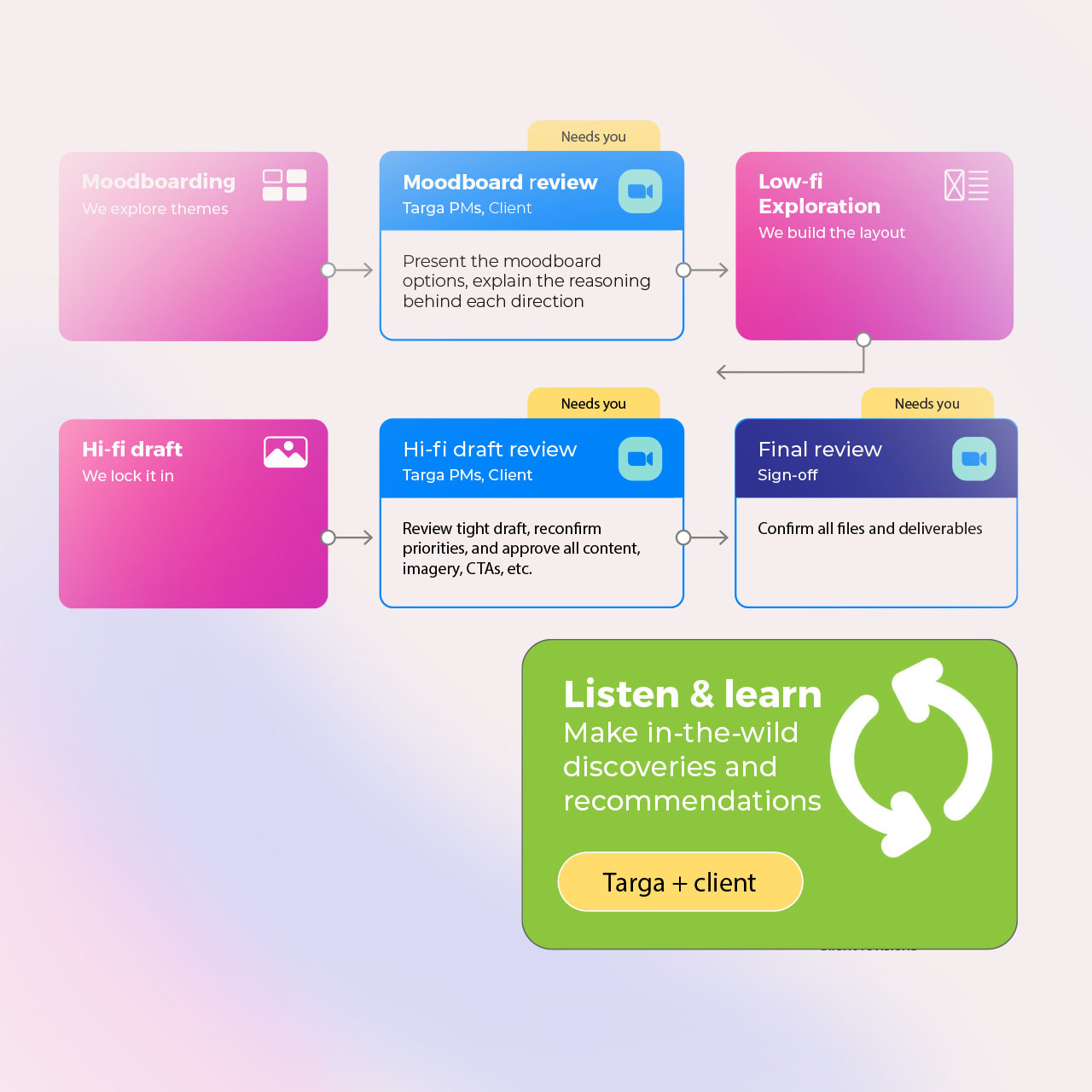
We’ve found that showing ideas early—even when they aren’t polished yet—can save everyone a lot of time. A client can tell us, “Yes, that feels like us,” or “No, we’d never say it that way,” before hours have been invested in taking the idea to completion. Brand control doesn’t come from approving every comma, it comes from staying connected to the thinking behind the work. In a recent call with one of Targa’s Fortune 500 clients, our team received updated guidance around their evolving brand refresh—including some visual choices they were leaning into that had previously been off the table. They meet with support agencies like ours on a regular basis in order to keep us informed and up to date. Because we learned about those changes in advance of their implementation, we could apply the new direction to work already underway rather than finding out after the designs were finished. This kind of ongoing communication helps us represent the brand accurately as it changes. We saw the same principle at work while our team was rebuilding our own website, where regular reviews helped us catch misalignment early and make better decisions together.
Give Your Marketing Partner Context, Not Just Assignments
Usually, the more we understand about why you’re asking for something, the better we can do the work. Tell your agency why the project matters, what you’ve tried before, what worked (or didn’t), and the result you’re hoping for this time. And don’t forget your sales team. They may know things about customer questions and objections that can help shape the campaign. Creating a regular feedback loop between Marketing and Sales Enablement can help turn those insignhts into stronger messaging and more useful campaign insights. The more your agency knows, the better informed their work will be.
There’s a big difference between saying, “We need an email campaign,” and explaining what the campaign needs to accomplish. Maybe customers are confused about a feature. Maybe sales needs more demo requests. Maybe research shows that one product benefit matters more than the others. That context gives your agency something to solve—not just something to make.

Decide Who Gets to Decide
Even with a great agency relationship, somebody eventually has to be the person who says, “Yes, this is approved.” When too many people veto power, it can get in the way of moving the work forward, so figure out who has final approval before the first project gets underway. Who will assign work to the agency? Who will be the touchpoint for approvals and edits? Decide which types of decisions will be left to the partner agency and which will stay in-house. This will prevent unnecessary confusion, extra review cycles and the frustration of a campaign going in circles because the process was not well defined.
Choose a Marketing Partner that Wants to Learn Your Brand
Look for a marketing partner that genuinely wants to understand your brand—not simply apply its own style to your work. A good agency will ask questions about your customers, business goals, sales challenges and past marketing, not just timelines and deliverables. In other words, they will be curious. They should be able to explain the thinking behind their recommendations and adapt to your brand rather than forcing you into a house style.
Keep the Brand, Lose Some of the Workload
Outsourcing marketing shouldn’t feel like handing your brand over to strangers and hoping for the best. The right partner doesn’t take ownership of your brand. They learn it well enough to help you protect it, strengthen it and put it to work.
Would we be a good fit?
We pride ourselves in learning your brand. If we’re a good fit, we’ll help you with your marketing. We’re an extra set of hands, showing up when it’s all hands on deck. Let’s connect and find out →