Wellness Hacks for Your Marketing Team: How to Beat a Creative Block

Wellness Hacks for Your Marketing Team: How to Beat a Creative Block

Heidi Blackburn

Heidi Blackburn

Assistant Project Manager

Wellness Hacks for Your Marketing Team: How to Beat a Creative Block

Unfortunately, all designers know that creativity can be rather elusive, especially after a very long and demanding season of work. But how can you do a job that requires creativity, when the tank is empty? Simply put, you can’t. So, let’s dig in and figure out how you can refill your creative tank and climb out of a rut.

Embrace a Little Boredom

Let your mind wander. When we are trying to get over a slump we try to push ourselves harder. Even trying to force inspiration with an over packed schedule and putting ourselves into overdrive. I get it, I have been there and I love a packed schedule as much as the next guy, but creativity doesn’t thrive under constant pressure. Our creative minds need quiet, stillness, and a little space to breathe. Chronic overstimulation leads to mental fatigue, which severely impacts our creativity. So, take a break. Allow yourself to be bored for a little while. Some of the best ideas surface when your brain finally gets a chance to idle.

Get Outside

A breath of fresh air can do wonders for a tired brain. Whether you are the hiking high adventure type, or the sit and watch the sun set type, or somewhere in between, spending time outside helps slow your thoughts and reset your mind. Step away from the screens, notice the details around you. It’s in these simple moments that inspiration often sneaks back in. Who knows? You might even stumble upon the spark that reignites your creative energy.

Change Your Scenery

Sometimes, a creative block is literally built by the four walls around you. If you’ve been staring at the same desk, the same poster, and the same coffee mug for months, your brain goes on autopilot.

Try shifting your physical environment to shock your system back into alertness. Pack up your laptop and work from a bustling local coffee shop, a quiet corner of a public library, or even just a different room in your house. A new environment forces your brain to process new sights, sounds, and stimuli, which can easily trigger a cascade of fresh ideas.
Find Balance

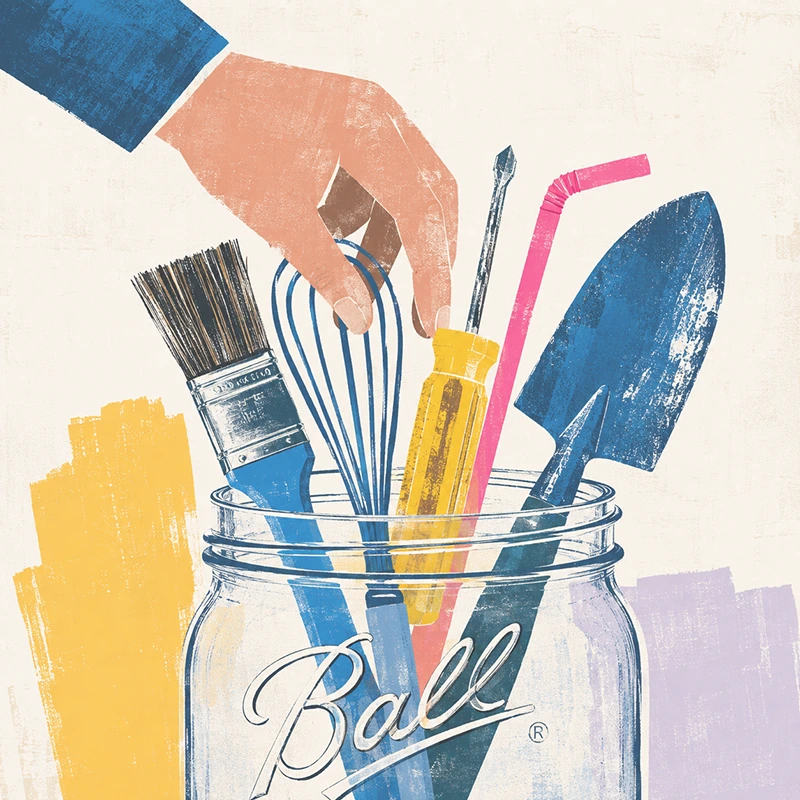
When I’m deep in a mentally demanding project that pushes my creative limits, I’ve learned I need a second project alongside it. Something a little more routine, or even mundane. This balance gives my brain room to breathe. When one task starts to feel draining, I switch gears to the other. It’s a form of active rest that keeps me productive while still protecting my creativity from burnout. Sometimes, stepping away from the “big” work is exactly what allows the best ideas to surface.

Try Something New

Branching out and trying something you have never done before can give you the inspiration that you were looking for. It doesn’t have to be a major change, it could be as simple as trying a new recipe or sketching in a different medium.

Trying something new allows your mind to stretch and grow. This can also open the doors to a new thought process and with that more creativity.

Clean Up

Turns out my mother wasn’t totally wrong when she said, “If you clean your room, you’ll feel better.”

Clutter, whether physical or mental, can block creativity. The simple act of tidying up your workspace can give your brain a sense of clarity and calm. It’s amazing how much mental space opens up when the physical space around you feels intentional.
As you clean, let your thoughts wander.

You might just unlock the idea you’ve been chasing all along.

Justin’s Approach: Embrace Structure and Trust the Process

When staring at a blank canvas feels paralyzing, designer Justin recommends shifting your focus away from waiting for a “big idea” and instead taking practical first steps.

By involving marketing and content stakeholders from the beginning, we were able to align structure, messaging, and visual design simultaneously.

As one of our designers put it:

“One thing I’ve learned is that sometimes we try to come up with the creative idea before we’ve even started placing the content or pieces we’ve been given. When you do that, the creative possibilities are wide open, which can honestly be overwhelming.
I’ve found that it helps to just start placing the pieces you know you need. As more of the content makes its way onto the page, the design starts to speak to you a little bit and you naturally begin working within the boundaries it creates. Having those constraints can actually make it a lot easier to be creative.
And sometimes you just need to walk away for a bit. Going for a walk helps me, but honestly any break that gets me out of ‘design mode’ can help diminish that overwhelming feeling of being stuck. Most importantly, trust the process. You’ll get there eventually. You always do.”

Diving Deeper

Infinite options lead to friction, whereas constraints spark problem-solving. By simply dropping required text blocks, logos, or layout assets onto the artboard, you force yourself out of abstract thinking and into execution mode.

Sara’s Approach: Fuel, Collaborate, and Recenter

Designer Sara relies on a combination of immediate sensory resets and big-picture realignment to pull herself out of a rut.

“Snacks and good music. Take a walk, look for inspiration, get feedback/brainstorm with another designer, return to project goals and ensure you understand target audience, switch to a different task and come back to it after a break.”

Diving Deeper

Sara’s strategy addresses a creative block from every angle:

  • The Physical Reset: Never underestimate the power of basic physical needs, a quick snack, great music, or stepping outside can quickly reset your nervous system.
  • The Social Reset: Creative blocks often happen when we get stuck inside our own heads. Bouncing ideas off another designer breaks the echo chamber and brings fresh eyes to the problem.
  • The Strategic Reset: When art direction feels unclear, go back to the fundamentals. Grounding yourself in the core project goals and target audience removes the guesswork and points you in the right direction.

Final Thoughts

Despite our best efforts creativity can’t be forced, but we can create the right conditions for it to return.

Rest. Breathe. Step outside. Make space in your mind and in your environment.
Behind the Screens: What Rebuilding Our Own Website Taught Us About Collaboration

Behind the Screens: What Rebuilding Our Own Website Taught Us About Collaboration

Heidi Blackburn

Heidi Blackburn

Assistant Project Manager

Behind the Screens: What Rebuilding Our Own Website Taught Us About Collaboration

If you’ve noticed things look a little different around here today…welcome to our brand-new digital home!

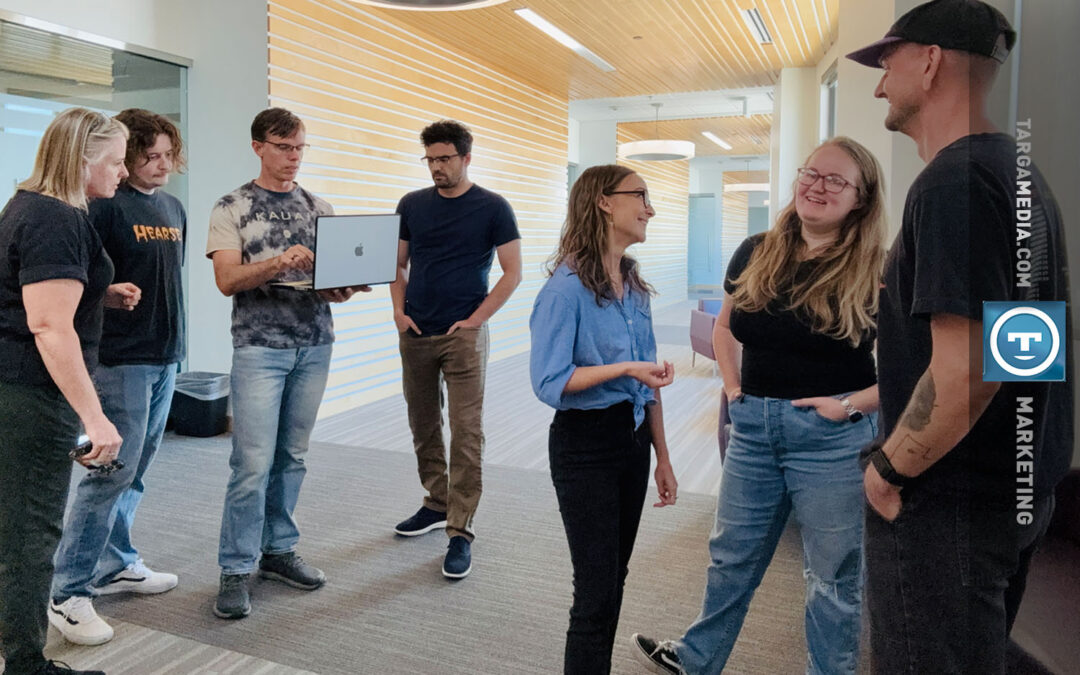
As a creative services firm, we spend our days building incredible things for our clients. But when it came time to redesign our own website, we decided to treat ourselves as the client and run an internal experiment. We didn’t want a small siloed team. We wanted a website that reflected our collective culture, and more importantly, we wanted to test a deeply collaborative way of working.

So, we turned our redesign into a weekly, company-wide co-creation process. What we learned along the way has completely redefined how we view client collaboration.

Building in Public

Our goal was not simply to launch a new website. We wanted to create a site that reflected the collective expertise, culture, and perspective of our entire team.

To make that happen, we established a weekly review cadence. Designers shared work in progress, discussed decisions openly, gathered feedback, and made adjustments in real time.

The website was not built behind closed doors. It evolved through continuous feedback from across the agency.

What emerged was not just a stronger website. It was a stronger process.

Over time, marketing starts feeling fragmented instead of intentional.

Faster Alignment, Fewer Surprises

One of the biggest advantages of the weekly review process was how quickly we could validate ideas.
In many projects, teams spend days or weeks refining a feature only to discover it does not support the larger goal. Regular feedback helped us avoid that trap.

As one of our art directors explained:

“The weekly feedback loop was helpful because the regular cadence prevented wasted down rabbit holes that weren’t going to lead us where we needed to go.”

Rather than waiting until the end of the project to identify misalignment, we addressed it immediately.

The result was less rework, better decisions, and greater confidence that the project was moving in the right direction.

Why More Voices Worked

Conventional wisdom says too many stakeholders create too many opinions.That certainly can happen when projects lack clear goals.

One of our creatives reflected on the experience this way:

“Having everyone in the meetings was helpful because everyone’s voice is valued and appreciated. Since our mission was clear, there wasn’t much conflict, just healthy discussions around our options and goals.”


Success did not come from limiting participation. It came from creating clarity. When the objective is understood, collaboration becomes productive rather than disruptive.

The Power of Early Content Alignment

One of the most valuable lessons came from the relationship between design and messaging. Website projects often focus heavily on visual design early in the process. But design can only be as effective as the story it helps communicate.

By involving marketing and content stakeholders from the beginning, we were able to align structure, messaging, and visual design simultaneously.

As one of our designers put it:

“In the early phases, having marketing alignment in the copy and headlines was helpful. It helped steer the ship in the right direction from the start.”

That alignment prevented unnecessary revisions later and helped ensure every design decision supported a clear business objective.

What This Means for Our Clients

The biggest takeaway from rebuilding our own website was not about design. It was about collaboration.

The most successful projects are not created through long periods of isolation followed by a dramatic reveal. They are built through consistent communication, shared ownership, and ongoing alignment.

That is the approach we bring to our client work.

By involving stakeholders early and reviewing progress regularly, we can:

  • Reduce costly rework
  • Stay aligned with business objectives
  • Surface better ideas sooner
  • Accelerate decision-making Build stronger outcomes

Explore the New Site

Our new website reflects more than an updated visual identity. It represents a process we believe in, one built on transparency, collaboration, and continuous improvement.

Take a look around and explore what’s new.

And if you are planning a website redesign, campaign launch, or creative initiative, we would love to talk about how a more collaborative approach can help you achieve better results.