What is Figma, and Why it Matters

What is Figma, and Why it Matters

Taleen Ericksen

Campaign and Program Director

What is Figma, and Why it Matters

Introducing a Design Tool We Love (and Sometimes Hate)

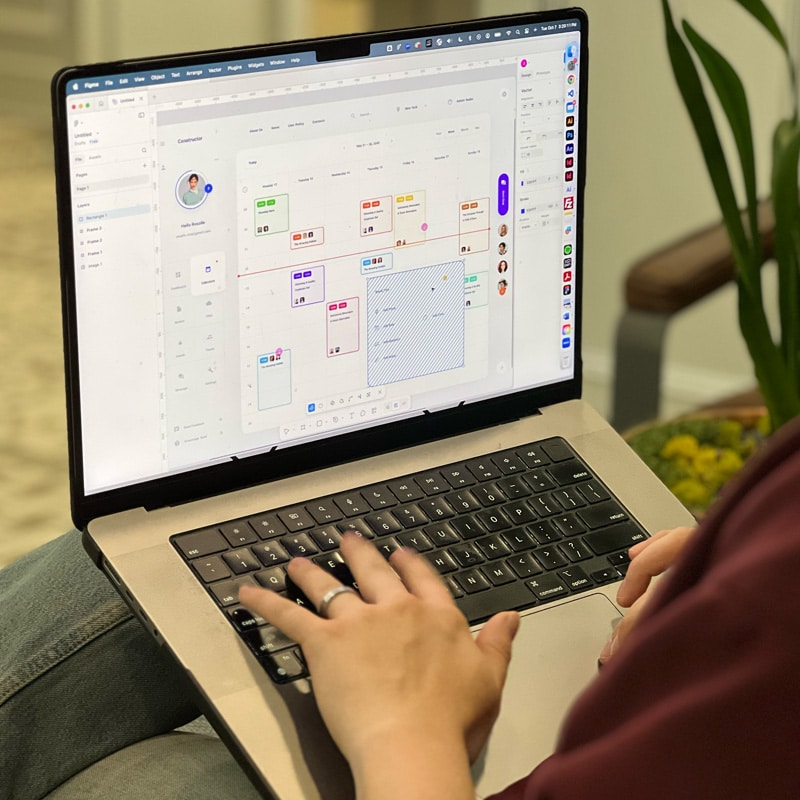
At Targa, we live at the intersection of creativity and collaboration. Our work demands tools that help us move fast, stay aligned, and deliver work that looks as good as it performs. For us, one tool we—and 10 million others—are embracing more and more is Figma.

Figma is a cloud-based design and collaboration platform that brings designers, developers, and stakeholders into one shared space—real time, from anywhere. It combines design, prototyping, version control, commenting, and even dev handoff, reducing friction and aligning teams from vision to execution.

We use it daily as a design platform, a review space, and even a collaboration hub. And while no tool is perfect, Figma has become core to how we design, iterate, and deliver creative work—for ourselves, our partners, and our clients.

What We Love

    • True Collaboration: Figma broke design out of the “one person, one file” model.Multiple people—designers, strategists, clients—can be in the same file at the same time. It’s like Google Docs for design, and it’s a game changer.
    • Efficient Design: Strategy, ideation, testing, pivots—it all happens faster and smarter on a larger, shared canvas.
    • Easy Reviews: No more endless PDFs or static screenshots. With comment pins, version history, and shareable links, review cycles are faster, cleaner, and less error-prone.

What We Don’t Love

    • Performance at Scale: Big files can still lag.
    • Comment Chaos: Real-time feedback is great, but sometimes it can feel like too many voices at once, especially mid-design.
    • Learning Curve for Non-Designers: It takes a minute to learn how to navigate in Figma but we’re getting better at training clients and partners every day!

Why It Matters for Our Clients

At Targa, we live at the intersection of creativity and collaboration. Our work demands tools that help us move fast, stay aligned, and deliver work that looks as good as it performs. For us, one tool we—and 10 million others—are embracing more and more is Figma.

    • Visibility earlier in the process—no surprises when the final draft lands.
    • Fewer review cycles because feedback is centralized and visible to everyone.
    • Confidence in alignment with your goals. Because we’re building and iterating together, we ensure the design, content and user experience meet objectives.
    • Streamlined vision-to-build workflows for interactive projects, websites, and gamification experiences.
    • Smarter dev handoffs minimize confusion and accelerate execution.

Where It’s Headed

We believe Figma is reshaping design the way Canva reshaped content creation and Google reshaped documents. As AI layers in and workflows expand, it won’t just be a design platform—it’ll be a decision-making platform. That matters for us as creators, and it matters for our clients who need smart, scalable design solutions. Not to mention that critical differentiator.

Final Thought

At Targa, we see Figma as more than a tool—it’s part of how we deliver clarity, consistency, and creativity. Embracing it is about staying ahead of the curve and giving our clients the advantage of a team that designs not just for them, but with them.


 

From SOS to Success: Why Clients Call Targa

From SOS to Success: Why Clients Call Targa

Jason Steed President and CEO at Targa Media

Jason Steed

Owner and CEO

From SOS to Success: Why Clients Call Targa

A Cry for Help

This real-world request came from a client facing an urgent, high-stakes launch, a business-critical initiative with impossible timelines. The kind of project where “good enough” wouldn’t cut it—and the deadline already felt like it had passed.

Sometimes it’s not just about deadlines—it’s about capacity. When you don’t have the hands, the brain power, or the experience in-house, you need a team that can plug in seamlessly and get stuff done. Well. That’s where Targa comes in: not just as designers or contractors, but as true partners who bring clarity, speed, and strategic firepower when it matters most.

A Heroic Response

Without question, we rallied the team, got the gory details from our client, and got to work. Hand-in-hand with our client, we created a strategic, well-crafted program:

    • Clarified the core messaging so it was sharp, simple, and strategic.
    • Designed high-impact visuals that not only looked great but told the story clearly.
    • Built a visual strategic framework to communicate objectives and execution.
    • Delivered presentation tools to sell the importance of the project internally.

The result? A project that landed with impact and gave our client the momentum they needed to build consensus, inspire the leadership team, and get the initiative launched faster than they thought possible. And, even though we can’t dish on the nature of the program, let’s just say it’s having an impact as it rolls out, helping the client meet key business objectives.

The Saga Continues

This isn’t the first time we’ve gotten an SOS like this. And we hope it won’t be the last. Why? Because it means our clients see us as their go-to team when the stakes are high and the odds are stacked against them.

At Targa, that’s the kind of trust we want to earn every day: being the first call when clarity, creativity, and speed all matter at once.

Final Thought

Deadlines will always be unreasonable. Budgets will always be tight. Priorities will always shift. Urgent projects will always appear out of nowhere. But when they do, we’re proud to be the team our clients know they can count on to make the impossible happen.

How Targa Hires the Best People (and Why That Matters for Your Business)

How Targa Hires the Best People (and Why That Matters for Your Business)

Alison Hayes Sr Marketing Admin at Targa Media

Alison Hayes

People, Culture, and Operations

How Targa Hires the Best People (and Why That Matters for Your Business)

Strategy Comes First—Even in Hiring

We believe great work is built through iterations, feedback, and the squishy middle that most people shy away from. That’s why we look for people who are comfortable showing early drafts, asking better questions, and improving with every round. We want teammates who value the how as much as the what—because a strong process leads to stronger outcomes. That philosophy shows up in our client work, too. We collaborate closely, bring ideas to the table early, and keep refining until the work works.

We hire intentionally, seeking out applicants who don’t just execute—they elevate. Whether it’s a brand strategist, a designer, or a content lead, we want people who can think through the big picture and contribute to results. That mindset shapes every interview. We oftentimes ask: How do you connect your work to business goals? What’s your process when you don’t have all the answers yet? How do you collaborate when the brief changes mid-project?

We Trust the Process

We believe great work is built through iterations, feedback, and the squishy middle that most people shy away from. That’s why we look for people who are comfortable showing early drafts, asking better questions, and improving with every round. We want teammates who value the how as much as the what—because a strong process leads to stronger outcomes. That philosophy shows up in our client work, too. We collaborate closely, bring ideas to the table early, and keep refining until the work works.

Teamwork Is a Core Skill

The ideal candidate is generous with ideas, open to feedback, and quick to support others when the pressure is on. We’re small enough that every person has a real impact—and that makes chemistry and communication non-negotiable. Great strategy doesn’t come from silos nor does great creative. Our best work happens when we think together, build on each other’s ideas, and stay focused on the shared goal: fueling long-term success for our clients.

Why This Matters to You

When you partner with an agency, you’re not just hiring a service. You’re hiring a team. And when that team is built on strategic thinking, collaborative energy, and a culture that values process and progress? That’s when we help clients achieve what matters most.

At Targa, we bring that mindset to every client relationship. We hire people who are built for that kind of challenge—and that kind of impact. If you’re looking for a team that leads with strategy, delivers with bold creativity, and cares just as much about how the work gets done as the results it produces—let’s talk.

We’d love to show you what Targa can do.

Takeaways from Two Years of Shared Leadership

Takeaways from Two Years of Shared Leadership

Jason Steed President and CEO at Targa Media

Jason Steed

Owner and CEO

Takeaways from Two Years of Shared Leadership

I founded Targa Media in 2002, working as a designer to deliver timely, targeted marketing materials and build lasting client relationships. That trust fueled two decades of growth. In 2023, Heather and I opened a new chapter by promoting Taleen Ericksen as co-owner. Shared leadership has proven to be a powerful propellant, adding depth to our services and expanding the vision for our team. What we have today couldn’t exist without that partnership. And over the past two years, I’ve learned some meaningful lessons about what it takes to nurture a thriving leadership dynamic. In this article, I’ll provide a checklist that I’ve seen make a difference…


“Ten years ago, I wasn’t ready to lead a “people” role. Today it’s the most fulfilling work that I do. I have Targa’s leaders to thank for it.”

Transcending Titles

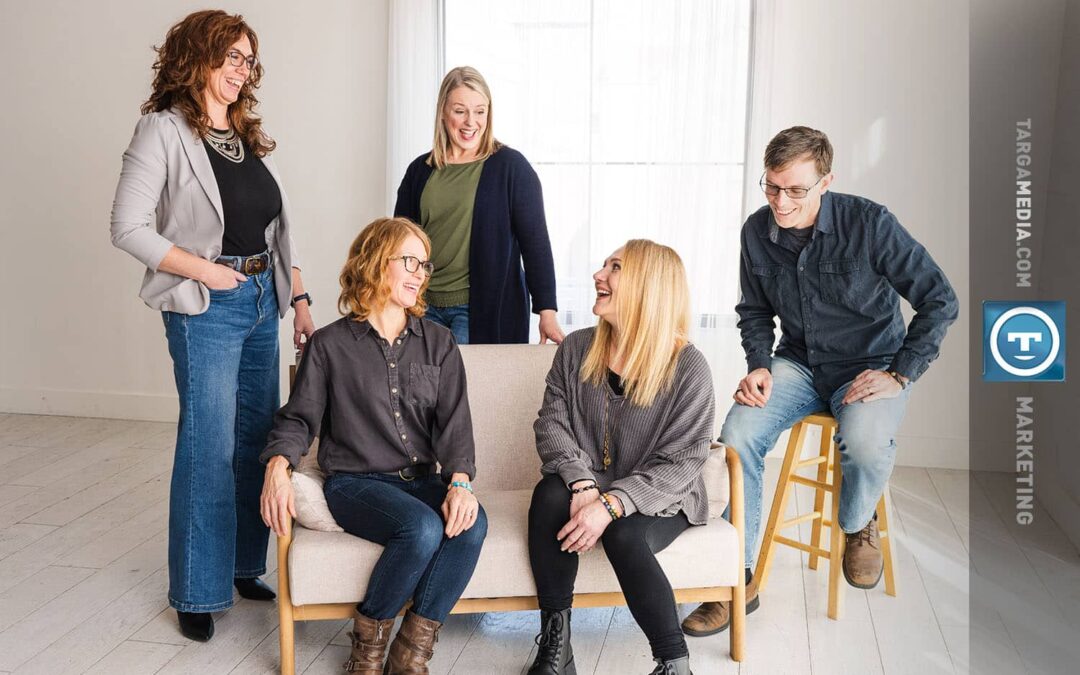
Now, as we mark our two-year anniversary, I’ve been reflecting on what enriches partnerships—and more importantly, what makes our team work. Because, while Taleen and I carry the title of partners, the leadership dynamic at Targa is much broader than the two of us. This article’s feature image highlights Heather, Alison, Lisa, Taleen, and me—and the unique energy each of us brings to the table. We’re all different people from different walks of life, who strive to lead with one voice. Not by losing our individuality, but by building trust through it.

Is Leadership Fixed or Flexible?

What we’ve built at Targa is a leadership dynamic where:

  • We teach by example
  • We make room for course correction
  • We check in often and honestly
  • We rely on each other in ways that go well beyond job titles

Whether it’s a campaign deadline, a client pivot, or a team member navigating something hard in their personal life, we show up. Not because it’s our job, but because it’s our culture.

We Lead by Living Whole Lives

Another lesson I’ve learned in these two years: I’m a better leader when I allow myself to live a whole life. Our team sees me stepping away to coach, walk my labradoodle Pepper, spend time with Heather, reminisce with my dad, or catch up on D&D podcasts with my 15-year-old.

I used to wonder if those interruptions were liabilities. But they’re not—they’re reminders that everyone on our team has a life beyond the project. When leaders model that, it gives the rest of the team permission to be human too. It strengthens the culture in ways that performance metrics can’t capture.

Mentoring Without Micromanaging

One of the most rewarding parts of leading this team is watching others step into their leadership voice. Sometimes that looks like mentoring a younger designer. Sometimes it’s suggesting a smarter workflow or questioning a strategy with care and clarity. At Targa, mentorship isn’t a top-down exercise. It’s embedded into how we work, review, and create. We believe in:

  • Letting people try
  • Giving meaningful feedback
  • Making room for growth—even when it’s messy

We’re not afraid of course correction, because that’s where real leadership happens. No one on our team is expected to be perfect—but we are expected to keep learning, keep iterating, and keep supporting each other.

Takeaways for Marketing and Sales Teams

If you lead a creative or demand generation team inside a larger company, there are a few lessons here that can strengthen your team dynamic and your outcomes. Whether you’re an internal marketing leader or collaborating with agency partners, here’s a checklist that we’ve seen make the difference:

  • Define who owns the “voice of the customer.” Is it marketing? Sales? Both? Who’s responsible for surfacing key customer insights to the creative team?
  • Hold regular cross-functional check-ins. Creative work improves dramatically when marketing, product, and sales align upstream—not just during review cycles.
  • Mentor through feedback, not fire drills. Rushed projects and fragmented feedback undermine creativity. Build a rhythm where feedback feels like growth, not damage control.
  • Celebrate progress, not just launches. Wins don’t just happen at the finish line—acknowledge milestone moments that show growth, clarity, or smart pivots.
  • Model humanity in your workflow. Let your team see that being creative and being a whole person is not a contradiction. Lead with presence.

Is it Targa Time? Why Smart Leaders Contact an Agency

Is it Targa Time? Why Smart Leaders Contact an Agency

Lisa Harmer

Campaign and Program Director

Is it Targa Time? Why Smart Leaders Contact an Agency

You’ve got a solid team. You’ve got a clear vision. What you don’t have? Time, budget, or quite enough hands to get it all done.

When headcount stalls but expectations keep climbing, marketing leaders are left balancing business goals, team bandwidth and burn-out or flight risk. You’re still expected to move fast, think big, and deliver impact—just with fewer resources.

That’s where an agency like Targa fits in. We don’t replace your team. We extend it. Think of us as your pressure-release valve for everything from campaign strategy to content production—without the overhead or onboarding slog.

We drop in, plug gaps, bring fresh thinking, and help you keep momentum without dropping balls or losing sleep.


So…how do you know if it’s Targa Time?

    • You have too much work but not enough time or resources..
    • Your in-house marketing team is overwhelmed.
    • You need more strategic and creative minds but can’t hire.
    • Your budgets are getting cut but you have critical work to do.
    • You’re drowning in deadlines and need everything yesterday.
    • You’re stuck dealing with agencies that over-promise, over-charge, and under-deliver.
    • You’re short on content expertise and need messaging that actually connects.
    • You’re launching into new markets and need help making a splash.
    • You’re ready to crush the competition.
    • You need to optimize your marketing and team up with sales for growth
    • You need to streamline your channel marketing with breakthrough campaigns.
    • You need marketing help to re-define or grow your business.
    • From spin-to-win games to quizzes, challenges, contests, and skill competitions, gamification offers marketers a new kind of toolkit for engagement.

So…how do you know if it’s Targa Time?

If you answered yes to even just one of those challenges, we might need to talk! We’re here to become an extension of your team, and make marketing magic happen—faster, smarter, more efficiently, with less stress and more results.

Why Operational Excellence is a Cultural Strategy (not Just a Systems One)

Why Operational Excellence is a Cultural Strategy (not Just a Systems One)

Alison Hayes Sr Marketing Admin at Targa Media

Alison Hayes

People, Culture, Operations

Why Operational Excellence is a Cultural Strategy (not Just a Systems One)

Operational excellence is often viewed through the lens of systems, processes, and performance metrics. But here’s the Targa Truth — no amount of software or metrics tracking can fix a culture that doesn’t value accountability, clarity, or continuous improvement.

Excellence isn’t just execution — it’s belief, behavior, and buy-in.

High-performing teams don’t just follow processes — they understand why the process exists, improve it when needed, and own the outcome. That mindset is cultural.

You see the connection between culture and operations in everyday things:

    • Clear onboarding that doesn’t just train on tasks, but explains the why behind them
    • Values-based goal setting that helps teams prioritize work with intention — not just urgency.
    • Thoughtful meetings that reinforce accountability, respect people’s time, and move decisions forward.

Culture is what powers all of that.

Our team values collaboration. A typical operational goal might be:
Increase team productivity by 10%.

A values-based version of that goal might be:
“Increase team productivity by 10% by improving cross-team handoffs and holding a shared weekly sync with project stakeholders.”

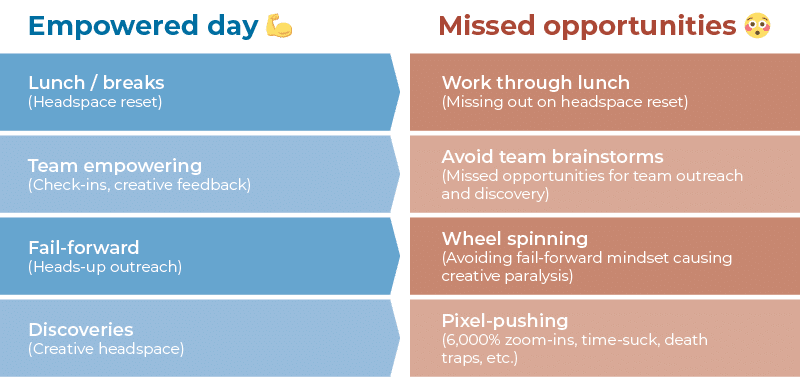
What does that look like in practice? Empowered cultures show up in the small, daily moments — the kind that either create momentum or quietly drain it. When teams are trusted, encouraged to experiment and given room to reset, they unlock creativity and collaboration. Without that foundation, even high performers can fall into reactive patterns that stall progress. This comparison breaks it down: the difference between an empowered day and a series of missed opportunities.

Right fit columns - Size of creative firm

The small shift reinforces your culture while still driving results — and that’s what operational excellence really looks like.

Yes, systems matter — but only if the people using them are aligned, motivated, and empowered. If you want your organization to operate at its best, start by shaping a culture that rewards ownership, curiosity, and follow-through.

Because excellence isn’t just a process — it’s a mindset.