Data Gives Creativity a Compass

Data Gives Creativity a Compass

Jason Steed

Owner & CEO

Data Gives Creativity a Compass

We creative types carry an invisible compass—our instincts. They’ve been forged in brainstorms, pitches, prototypes, and client wins. But as much as we honor creative instinct, we also know that instinct isn’t the same as insight. And if there’s one truth I’ve learned in my career, it’s that data trumps opinion.

Data Brings Direction

It doesn’t mean we strip creativity of its magic. It means we build the right fence at the right time because we know where the cliff edge is; because we know why our services solve problems. We don’t stifle ideas—we give them direction. We give them purpose. I’ll share some of the most valuable metrics in this article, along with key discovery questions in building meaningful marketing campaigns.

Kudos to the Creatives who Dig the Data!

Even early in my design career, I was drawn to the metrics. My Marketing 101 elective at BYU left a lasting impression, and later I taught e-commerce at the University of Utah. I often felt too analytical for a creative field, compared to my creative peers—until I realized I was more wired for commercial art than for fine art. In our organization, we are always asking the questions: Who, how, when and why. These are more than marketing questions. They’re creative prompts. And everyone on our team—everyone—asks them. From project managers to designers to strategists, we share the same compass: Data-informed creativity. Boundaries give context to campaigns.
It’s easy to fall in love with a design because it “feels right.” But when creative work lives inside a business ecosystem, the stakes are higher than personal taste. Our job isn’t just to create something beautiful—it’s to create something effective: something that resonates, something that converts. Effective work starts with asking the right questions:
  • Who is the audience?
  • Why should they care?
  • How are they engaging with us?
  • When are we reaching them?
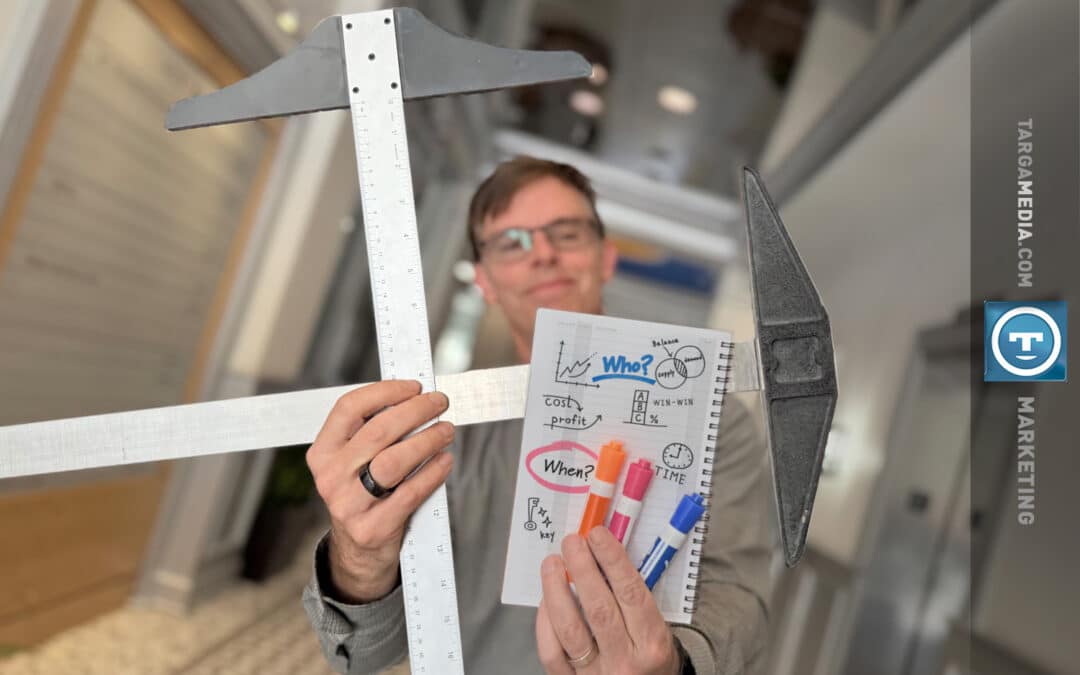
Who what when where why important marketing questions

Let Metrics Art-direct the Work

We marketers are in the business of marrying constraints with creativity. When we know the rules, we can break them with intention. But when we don’t know what the data says, it’s just pretty-looking guesswork. Here’s how we shift from guesswork to grounded inspiration:
  1. A/B test two versions of a campaign and study what performed better
  2. Track engagement across different audience segments to guide message tone or visual hierarchy
  3. Monitor sales impact or lead conversions tied directly to campaign rollouts
“Asking who, why, how and when is part of our culture. It’s part of our stewardship. And the more we ask these questions, the more trust our clients place in our creative partnership.”

Finding the Best Data

The best data comes from many sources—most importantly, from the customer. One of our most important responsibilities is to help clients uncover the data that matters. That means going deeper than surface-level metrics like impressions or “likes.” The best insights often hide inside sales data, customer service tickets, CRM feedback, and behavioral trends.

In our work, we make it a point to ask:

  • Who is this campaign really for?
  • Why are they choosing competitors over you?
  • How do those people make decisions?
  • When do they engage with similar products or services?

These are the same questions we ask ourselves internally. It’s part of the culture. It’s part of our stewardship. And the more our clients know we’re asking these questions, the more trust they place in our creative partnership.

Products on the shelf
Targa’s Top 4 Business Growth Takeaways from T-Max 2025

Targa’s Top 4 Business Growth Takeaways from T-Max 2025

Jason Steed President and CEO at Targa Media

Jason Steed

Owner & CEO

Targa’s Top 4 Business Growth Takeaways from T-Max 2025

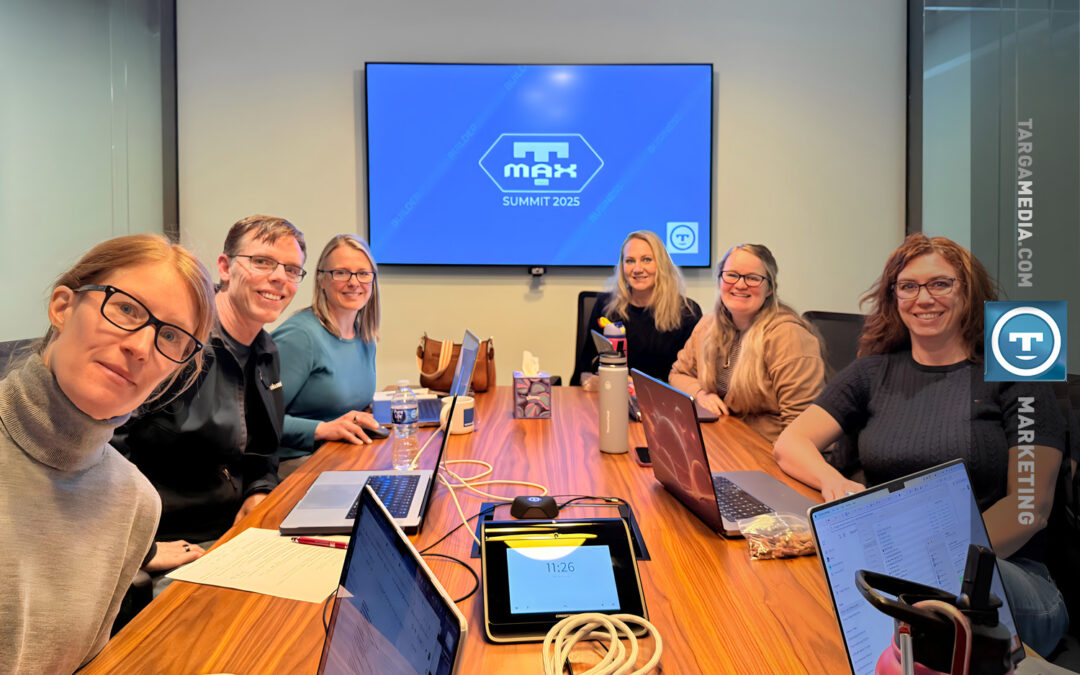
With 2025 in full swing, Targa is sharpening its focus on how we grow. T-Max 2025, our annual executive summit, helped us meld long-time tools with what we have yet to discover. If you’re in marketing, sales, or leadership, here’s what we’re prioritizing and how you might apply similar strategies in your vital roles.

For starters, I built the bulk of our agenda on feedback from my 2024 Eval / 2025 Goals survey that I personally conducted with every team member. Our team’s talents and goals have a tremendous impact on our leadership’s priorities. My compass centers on reconciling what we can become, paralleled with who each of us is today. My convictions drive my close attention to this balance for creating our culture’s sweet spot. These 4 discoveries emerged from our time together at T-Max:

1. Building Business while Maturing Culture

For us, growth isn’t about stacking headcount—it’s about developing the team and the systems that sustain long-term success. Our goal isn’t just to expand but to refine how we work, who we work with, and how we create value together.

Nurturing culture in a 2025 business landscape:

    • Building our talent pipeline intentionally – Promoting from within while selectively hiring external expertise where needed.
    • Sustaining our creative culture – Growth cannot and should not dilute what makes a team great. We’re reinforcing collaboration, agility, and iterative problem-solving.
    • Strengthening leadership pathways – We’re evolving our mentorship and delegation models to empower emerging leaders.

2. Client Stewardship: Adding More Value, Not Just More Services

It’s tempting to chase trends and expand services—but we’re doubling down on what we do best. That means refining our Unique Value Proposition (UVP) and ensuring our clients get strategic, high-impact marketing support.

What this means for marketers and decision-makers:

    • Focus on differentiation. Don’t just add services—refine what makes your brand indispensable.
    • Evaluate your audience strategy. Are you truly speaking to your best-fit clients, or trying to be everything to everyone?
    • Think beyond branding. What gets lost in the translation of telling your brand vs. hearing your brand? We marketers get in our own way far too often. Simplicity is meaningful and rejuvenating. Put another way: Branding isn’t just storytelling—it’s clarity, resonance, and relevance.

3. Shifting from Pricing Strategies to Value Strategies

One of our biggest priorities is to maintain and optimize our 22+ year clear and concise value models. We continually seek out best value-centric solutions, culminating around performance and results.

Ask yourself whether your perceived value matches your customers’ perceived value. More importantly, when perceived value doesn’t match (which is far too prominent in many business pricing models), how quickly and easily can you align with your stakeholders? Bridge perception gaps with timely and transparent communication. It all boils down to one word: trust.


4. Creative Leadership: Keeping Teams Agile

As we continue to evolve, our leadership approach must evolve with us. The best leaders don’t just execute—they confront chaos with curiosity, collaborate on workflows, and enlist the full team to help them remove obstacles.

At Targa, we’ve seen stronger leadership when we shift from direct execution into mentorship, process refinement, and a culture of curiosity.

For Leaders Looking to Scale:

    • Delegate by example. Empower your marketing support and sales teams with clear growth paths instead of just handing off tasks..
    • Encourage a “fail-forward” culture. Creative teams thrive when they’re given the space to experiment without fear of failure.
    • Refine, don’t over-polish. Real-world feedback is more valuable than over-engineering campaigns in a vacuum. The best campaigns evolve in motion—constantly adjusting to real-world feedback instead of stalled and stagnant.

    Want to See Us in Action?

    T-Max 2025 laid the foundation for intentional growth, where team development fuels business expansion—not the other way around. Whether you’re scaling your own team, refining your marketing strategy, or optimizing operations, the key takeaway is this: growth is a byproduct of well-developed people, processes, and positioning.

    Want to see our T-Max takeaways in action? Let’s talk about how Targa can help your team scale with agility and impact.

    All In? Or 2 Places at Once?

    All In? Or 2 Places at Once?

    Jason Steed

    Owner & CEO

    All In? Or 2 Places at Once?

    My Thoughts on Showing Up as a Busy Marketer

    The struggle is real! It all has to be done, and days aren’t getting longer anytime soon.

    It’s terribly awkward, isn’t it? Those moments of being everywhere, yet not really there. We’ve all been on both sides of these encounters. It’s all too easy to fall into the trap of spreading ourselves too thin. Life is demanding, and “I’m not driving” can feel like the only solution. Our deep attention is vital in our leadership roles, and we marketers and team leaders have to shed distractions.

    Yes, we have to say “no.” Who’s with me?

    All In vs. Half-baked

    In marketing, the subtle cues really matter! A marketer’s biggest contribution is in baking the right ingredients into a meaningful marketing campaign. Only when we’re all in can we absorb the nuances of audience, message, timing and placement. Because those ingredients are always in flux, we can’t spread ourselves too thinly by simply refurbishing past campaigns.

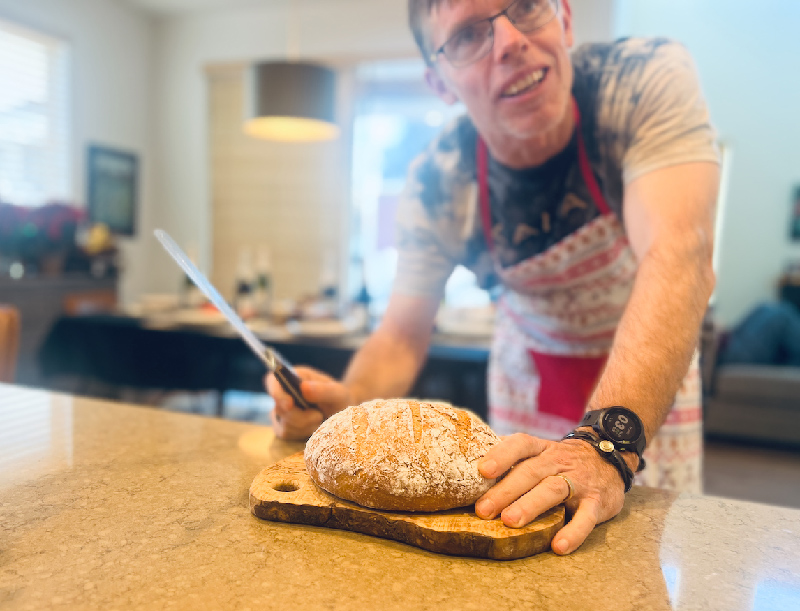
    Jason Steed bakes gluten-free bread Thanksgiving

    Authenticity: Handle with Care

    You know that feeling when someone’s actually paying attention to you? Not just nodding while making a mental list. That’s authenticity and it’s a precious commodity in leadership roles. When you show up fully engaged, people feel it. They trust you. They respect you. It’s not something you can fake, and no amount of rehearsed multitasking tricks can replace it.

    Being fully present means capping our time. Authenticity requires shining a light on our distractions and choosing to invest our time and energy where it really counts.

    When it comes to being all in, never underestimate the power of “Just one sec, let me wrap something up.”

    Ditch the Distractions

    Confronting then ditching our distractions is undoubtedly lifelong work. I’ve come to realize how important it is to drop our “mental listing,” even if just for a moment. Incessant mental tallying is a viable survival tactic, but hitting the pause button lets us contribute the best ideas from our best selves. So, now that we’ve called it as it is, how can we avoid those exposing situations of being half-invested? The first step in being more present is recognizing what’s pulling you away. Ask yourself these simple questions:

    • “Can I give this my sincere attention?” If not, it’s probably not worth your focus.
    • “Can I give this my attention right now?” Timing is everything. Just because something’s important doesn’t mean it’s urgent.
    • “Should I stop giving this my attention?” Letting go of what doesn’t matter is hard, but it frees you to focus on what does.
    • “Am I needed, or just wanted?” It’s a life-long pursuit in recognizing the difference, but essential to showing up in the right places.
    • “Just one sec, let me wrap something up.” Never underestimate the power of this statement when you’re pulled into an important moment.

    These little check-ins keep you honest with yourself and help you stay in control of your priorities.

    Make the Tough Choices: The Imperative “No.”

    Here’s the deal: your time, energy, and focus are limited. You can’t do it all, and that’s okay. In fact, it’s freeing. When you start saying “no” to the things that don’t need you, you’ll have more space to say “yes” to the things that do. And when you’re all in, people notice.

    Be Picky, but Be Present

    It’s not about doing everything; it’s about doing the right things with your whole heart. Start being picky about where your time and energy go, and watch how it changes your relationships, your work, and even your own peace of mind. So, next time you’re pulled in ten different directions, ask yourself:

    • Does this really need me?
    • Can I give this my full focus, or am I just going through the motions?
    • What’s the cost of saying “yes” to this?
    Gavin's tree in Minecraft

    Marketing Case Study – Minecraft with my 15-yr-old:

    Showing up where we’re truly needed makes us better thinkers and problem-solvers. We’ll also bring more energy to the people and moments that matter most in our professional and personal lives.

    Just this past week I was reminded of the value of quality of time over quantity. Though I don’t find much interest in Minecraft, I like seeing the creative worlds through my 15-yr-old’s gaming eyes. Instead of “doing time” over his shoulder, I briefly “checked out” of my own head and learned what was in his head (i.e. understanding our audience). He’s very clever with the way he builds authentic-looking terrain, including trees with lighter colored half-blocks that looked like exposed root systems around the trunks.

    I loved learning how realistic landscapes are important to him (i.e. audience motivation). I learned that because I asked. I asked because I was curious. I was curious because I was all in for that short block of time.

    Afterward, my mental lists were still there for me, with an added perk of meaningful father-son bonding for both of us.

    Show Up Wholeheartedly

    Life’s too short to phone it in. Let’s commit to showing up where we’re needed most. The ripple effects of our presence—at work, at home, and in the world—are worth it.

    Our Vagus Nerve is Fresh Air for Meaningful Marketing

    Our Vagus Nerve is Fresh Air for Meaningful Marketing

    Jason Steed

    Owner & CEO

    Our Vagus Nerve is Fresh Air for Meaningful Marketing

    Last month I renewed my certificate as a Certified Primal Health Coach. Though my roles at Targa keep my coaching business on the sidelines, I find myself putting many wellness principles into practice. In this blog, I’ll share a bit about the biology of our shared humanity, and how we’re all wired to strengthen connections with our teams, our customers, and our inner circles with family and friends. I think your “vagus nerve” is going to love this! Featured image: My wife, Heather and I are with our Labradoodle Pepper in the northern Utah mountains.

    Meet your Vagus Nerve

    To start, what if a key to stronger connections—and better business outcomes—lies in something as basic as our physiology? Our vagus nerve is responsible for many human qualities, including those essential for genuine connections: Authenticity, mutual trust, and empathy. We marketers and creatives rely on these qualities to learn and understand audience behaviors (empathy), craft a meaningful story (authenticity), and grow and retain our audience (mutual trust). These qualities and other positive human qualities are hardwired from our vagus nerve, the longest cranial nerve, extending from brainstem to chest and abdomen.
    Vagus Nerve Illustration Depiction

    Inspiration for our Everyday Work

    Our leadership roles make us stewards of people and purpose. Our biggest advantage in this space is that we’re all human—biologically wired to seek connection, understanding, and trust. For instance, the vagus nerve, a key component of your nervous system, plays a critical role in regulating emotions, stress, and even social bonding. When you’re calm and present (i.e. parasympathetic), your body is more attuned to others. You’ll listen better, react less impulsively, and build trust faster. Sounds like solid qualities when collaborating on a creative brief, making product marketing decisions, and beyond.
    “Customer connections don’t require abundant experience, but rather a desire to be authentic and gutsy.”

    How to Call Upon your Vagus Nerve

    Here’s the thing: cultivating habits that promote vagal tone can enhance its activity and influence. Our ability to connect, listen, and lead isn’t just a mindset—it’s also influenced by our body’s state. For example, activating your vagus nerve through small, intentional habits can help you stay calm under pressure and present in conversations. Here are a few practices to consider:
    • Compassion: Approach interactions with genuine care. Compassion not only builds trust but also reduces stress for everyone involved.
    • Authentic “Me” Time: Prioritize moments that recharge you, whether that’s a walk, meditation, or time with family.
    • Face-to-face Conversations: Whenever possible, meet customers and colleagues in person. There’s no substitute for the connection of real-world interactions.
    No doubt, there are other ways we support the vagus nerve, such as breathwork, mindfulness, and even cold exposure, but I’ll save these topics for a later post. 😉 Suffice it to say, these small and simple shifts make a big difference in how you show up for your team, your customers, and most importantly, for yourself.

    Build a Culture of Authenticity

    In my 25+ years in marketing and creative storytelling, I’ve learned that we find common ground before we sell products. As marketers and communicators, we treat every campaign, every sales pitch, and every customer interaction as an opportunity to connect on a deeper level. This approach doesn’t require abundant experience or anything near perfection. It simply requires authenticity—and being authentic means being gutsy. When you take the time to understand your audience’s needs and objections, you’re not just marketing—you’re building lasting relationships. We’ve talked honing our hardwiring for empathy, mutual trust, social engagement, and authenticity. When we approach our work with this mindset, we gravitate to a culture that shares in the important work of storytelling on behalf of our clients.

    Bringing it All Together

    Human connection is the thread that ties everything together in business. Whether you’re designing a marketing campaign, closing a sale, or leading a team, your success depends on how well you understand and respond to the people you’re working with. And while techniques and strategies are important, never forget that connection starts with something simpler: our shared humanity. The more we embrace what makes us human—compassion, curiosity, and a willingness to listen—the more meaningful our work becomes. I believe that, when we trust ourselves and open up for potential vulnerability, we do our best work: from planning to brainstorming, to writing and crafting creative campaigns.

    A Season for Gratitude

    Above all, the vagus nerve is a monumental driver of gratitude. On that note, may this season bring you better in touch with colleagues and friends, fulfilling work, good health, and ample unplugging for the moments that truly matter.
    What Focus Helps us See, and Makes us Miss

    What Focus Helps us See, and Makes us Miss

    Jason Steed

    Owner & CEO

    What Focus Helps us See, and Makes us Miss

    The Best Ideas are Often Outside our Focus…

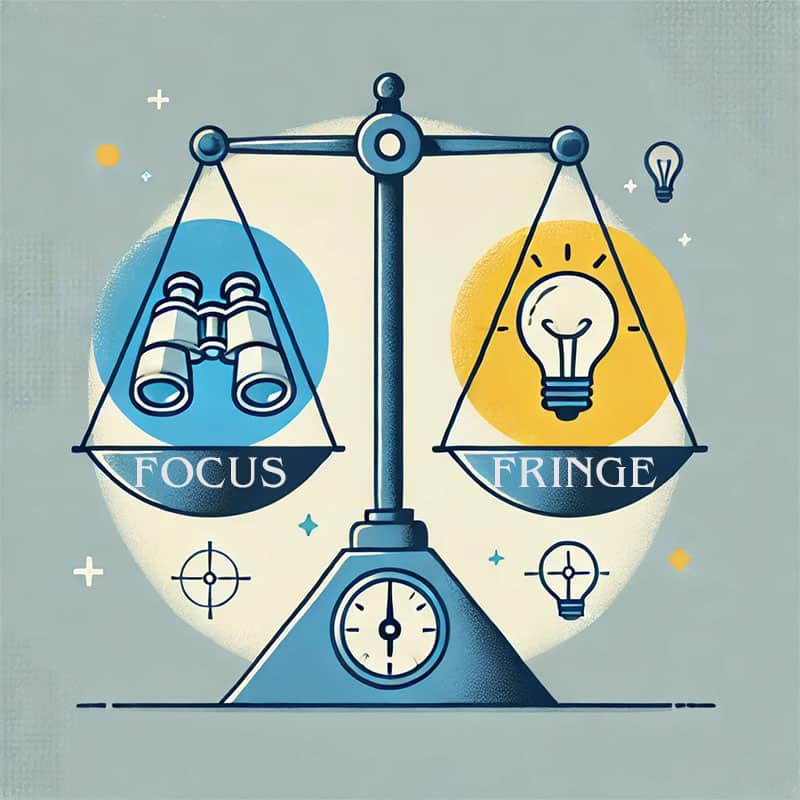
    Strange how the best ideas live where you’re not looking. So how do we creatives and marketers benefit from focus and structure? I’ve found that focus is step 1 to great creative, and step 2 is looking outside of those crosshairs. Here are ideas for spotting where the great ideas like to linger.

    Balance the Macro With the Micro

    I spent an evening with great marketing minds at the Utah Olympic Oval, sponsored by Silicon Slopes. I had never picked up a curling rock before (you don’t actually ever pick them up), and I gained a big respect for the game. While trying to keep my balance in launching “the rock,” I understand now why curling requires conditioning, stamina, and lots of focus. While focusing on the pinpoint instructions from my teammates, it got me thinking about the balance between focus and making room for the bright ideas lurking in our periphera.

    For me, focus is critical for setting the guide rails to a project. Focus creates the fenceline perimeter where great ideas hang out.

    Products on the shelf

    You’d be amazed how both the micro (focus) and the macro (wide-angle view) bring variety and creativity to an anything-goes brainstorming session. The big picture ideas appear at the borders of your idea cloud—alongside the bizarre, goofy, cliché, and downright dorky ideas. Focus defines those borders, and, de facto, the sweet spots along the borders. At the same time, too much time ruminating on the big picture creates fun yet mostly irrelevant ideas.

    This balance is crucial in our line of work. We need focus to keep us off thin ice and to push through the challenges and see a project to completion. But without leaving space for creativity, we risk missing out on those unexpected game-changing ideas. Here are some tools to help you spot those great ideas lurking in the wings:

    Products on the shelf

    Strategic Balance

    1. Time Blocking: Yes, you can actually schedule creative time. I dedicate specific “focus time” in my day. For me it’s During these blocks, shut out distractions and focus entirely on the task at hand. This helps build the momentum needed for high-quality work.

    2. Pomodoro Technique: Work in short, focused bursts (like 25 minutes), followed by a 5-minute break. I’m THE WORST at this! Truly, my OCD nature gets me stuck in ruts all of the time, though I know this method keeps creative minds sharp and ready to catch those peripheral creative ideas.

    3. Scheduled Brainstorming Sessions: Set aside regular time for brainstorming. Whether it’s a solo session or with a team, these unstructured moments can lead to the breakthroughs you’re seeking.

    4. Environment Switching (my favorite): If you’re feeling stuck, change your environment. Whether it’s moving to a different room, taking a walk, or even working from a café, a change in scenery can spark fresh ideas. Truthfully, my best ideas come to me when I’m miles away from my laptop with my labradoodle Pepper. Usually a lunch break does the trick.

    Alongside focus, step back to find those great ideas that hang out in the fringes.

    5. Journaling: Keep a journal (a.k.a. Notes app) to jot down any ideas, no matter how small or seemingly unrelated. Revisiting these notes later can often lead to surprising insights and new connections.

    My Example Story on Focus

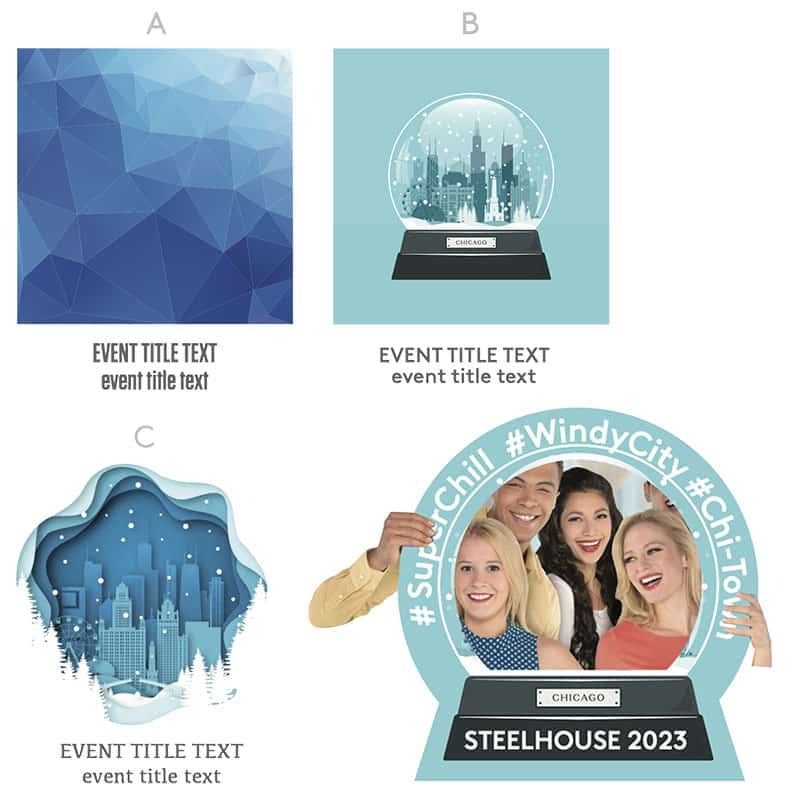
    Moodboarding is a visual storyboarding tool to Targa uses early on in our team’s creative process. We have the chance to pull our clients away from sharp focus to discover some fringe ideas for their projects. Targa helped one of our technology clients brand a hosted on-site event. Ryan on our creative team led out with our creative team on some moodboard exploration, helping to mature a concept that melded crystal with organic design elements. From this exercise, our client supported our out-of-the-box theming for a variety of event materials, from invitations to floor displays, to a selfie station.

    Products on the shelf

    Tie it All Together

    By balancing structured focus with intentional space for creativity, you’ll be better equipped to produce work that not only meets expectations but exceeds them. I’m curious what your go-to creative strategy looks like.